The Evolution and Impact of Financial Lending in Modern Economies
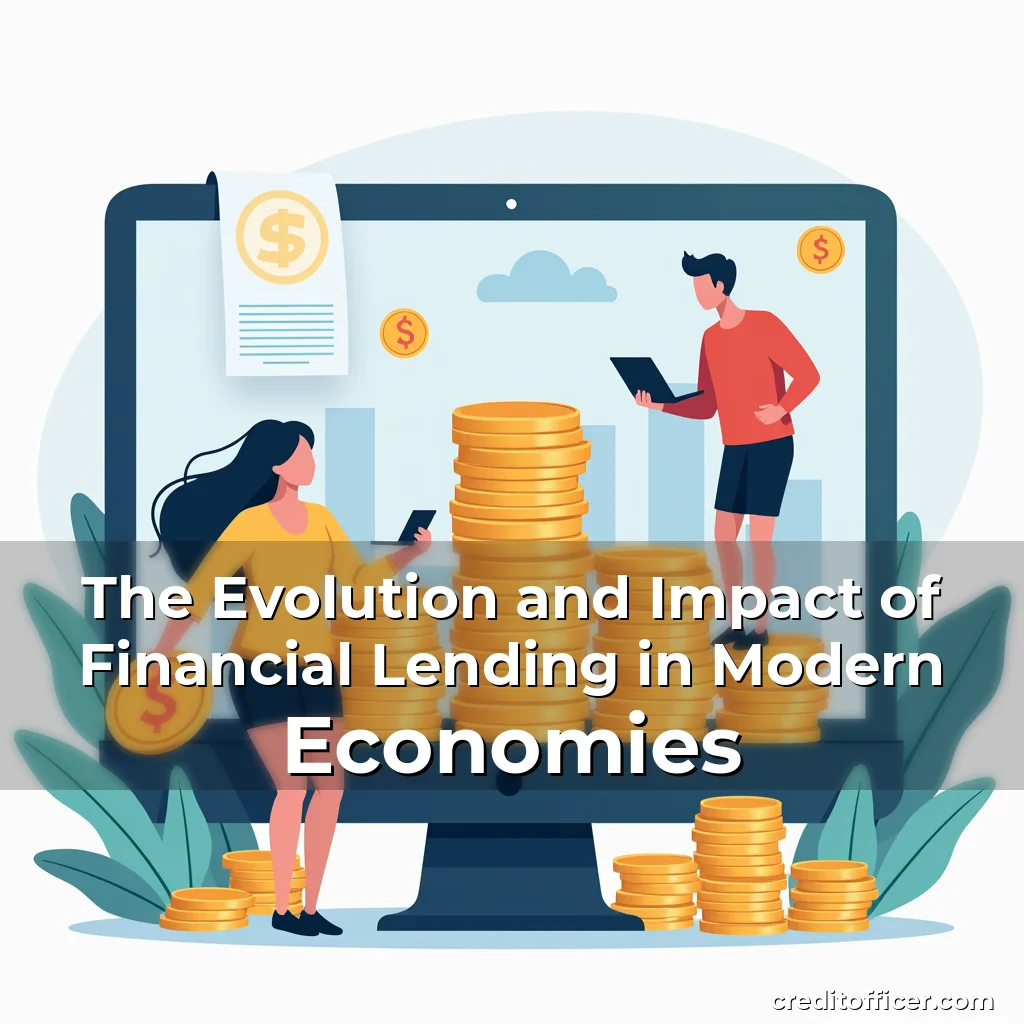
In an era where economic stability is often dictated by access to capital, financial lending has emerged as both a cornerstone and a catalyst of modern economies. From small businesses seeking growth to individuals pursuing homeownership, the role of lenders extends far beyond mere transactions—it shapes opportunities and risks across societies.
This exploration delves into the intricate world of financial lending, uncovering its historical roots, current practices, challenges, and future trajectories. Whether you’re a seasoned credit officer or someone new to the field, understanding these dynamics can empower informed decision-making and foster sustainable lending ecosystems.
The Historical Foundations of Financial Lending
Financial lending traces its origins back thousands of years, evolving from simple barter systems to complex financial instruments that define today’s global markets. Early civilizations used informal agreements to lend grain, livestock, or other goods, laying the groundwork for structured credit mechanisms.
With the advent of written records, ancient Mesopotamia introduced clay tablets detailing loans between merchants and temples, marking one of the first instances of formalized lending contracts. These early practices established principles such as repayment schedules and interest rates—concepts still relevant in contemporary finance.
- Risk Assessment: Even in antiquity, lenders evaluated borrower reliability based on social status and past behavior, reflecting the timeless importance of risk evaluation in lending decisions.
- Interest Rates: The concept of charging interest dates back to Babylonian times, where it was regulated through legal codes to prevent exploitative practices and ensure fair compensation for lenders.
The Role of Credit Officers in Contemporary Lending
Credit officers serve as gatekeepers in the financial ecosystem, tasked with evaluating loan applications and determining their viability. Their expertise lies in analyzing financial statements, assessing collateral value, and identifying potential defaults before they occur.
Modern credit officers leverage advanced technologies such as artificial intelligence and big data analytics to streamline processes and enhance accuracy. This shift not only improves efficiency but also enables personalized lending solutions tailored to individual or business needs.
A critical aspect of a credit officer’s job involves maintaining compliance with regulatory standards set by central banks and financial authorities. Adhering to these guidelines ensures transparency, reduces systemic risks, and protects consumers from predatory lending practices.
Evolving Challenges in Risk Management
Rapid technological advancements have introduced new dimensions to risk management within financial lending. Cybersecurity threats pose significant risks to sensitive customer information stored digitally, necessitating robust protective measures against breaches and fraud.
Moreover, economic volatility due to geopolitical tensions or natural disasters requires credit officers to adopt dynamic strategies that account for unpredictable market fluctuations. Proactive scenario analysis helps mitigate losses during unforeseen crises.
Diversification Strategies in Loan Portfolios
To minimize exposure to default risks, financial institutions employ diversification strategies that spread out investments across various sectors and demographics. A well-diversified portfolio reduces vulnerability to sector-specific downturns and enhances overall resilience.
For instance, combining personal loans with commercial mortgages or auto financing creates a balanced mix that cushions against industry-specific shocks while ensuring steady revenue streams. Such strategic allocation reflects prudent financial planning at institutional levels.
Additionally, geographical diversification plays a crucial role in mitigating regional economic disparities. By expanding operations into emerging markets with growing consumer bases, lenders tap into untapped demand without overexposing themselves to single-market risks.
The Influence of Regulatory Frameworks on Lending Practices
Regulatory frameworks significantly shape how financial institutions operate within the lending domain. Laws governing interest rates, disclosure requirements, and anti-discrimination policies influence every stage—from application processing to post-disbursement monitoring.
Compliance with regulations such as Basel III or Dodd-Frank Act mandates stringent capital adequacy ratios and stress testing protocols aimed at safeguarding depositors’ interests and promoting financial system stability. These measures help prevent excessive risk-taking behaviors among banks.
Furthermore, regulators continuously update guidelines to address emerging issues like digital banking frauds or algorithmic biases in automated underwriting systems. Staying abreast of policy changes allows credit officers to adapt swiftly and maintain operational integrity.
Global Perspectives on Regulation
Different countries impose varying degrees of regulation depending on their economic structures and development stages. While developed nations enforce strict oversight through comprehensive legislation, developing economies may prioritize rapid expansion over stringent controls initially.
International bodies like the Basel Committee provide standardized benchmarks that many jurisdictions adopt voluntarily. However, local adaptations are common to align with national priorities and cultural contexts effectively.
Tech Innovations Transforming Financial Lending
Technological innovations continue reshaping traditional lending models, offering enhanced convenience and accessibility for borrowers worldwide. Digital platforms enable real-time application submissions, instant approvals, and seamless disbursements—all powered by sophisticated algorithms.
Beyond speed improvements, technology facilitates better customer engagement through chatbots providing round-the-clock support and mobile apps allowing users to track their loan statuses effortlessly. These features contribute positively towards building trust and loyalty amongst clients.
Blockchain technology holds promise in revolutionizing documentation verification processes by creating immutable ledgers that reduce fraudulent activities related to identity theft or forged documents—a pressing concern in conventional lending environments.
Sustainable Finance: Integrating ESG Principles into Lending Decisions
Environmental, Social, and Governance (ESG) factors increasingly influence lending decisions as stakeholders demand greater accountability regarding sustainability efforts. Institutions now assess applicants based not just on financial metrics but also on their alignment with green initiatives or ethical labor practices.
Lenders investing in projects aligned with climate change mitigation goals receive preferential treatment in certain regions, encouraging responsible borrowing patterns while contributing positively toward planetary health objectives simultaneously.
Implementing ESG criteria demands thorough research capabilities combined with specialized knowledge areas; thus requiring ongoing education programs focused specifically on integrating these values seamlessly into daily operations without compromising profitability targets.
Future Trends Shaping the Landscape of Financial Lending
As we look ahead, several transformative trends indicate shifts occurring within the realm of financial lending. One prominent direction involves increased reliance upon predictive analytics tools capable of forecasting repayment probabilities accurately even amidst uncertain conditions.
Artificial Intelligence (AI), when appropriately trained using vast datasets comprising historical performance indicators along with macroeconomic variables, promises unparalleled precision in predicting defaults thereby reducing bad debt occurrences substantially.
Furthermore, there appears to be heightened emphasis placed upon inclusive finance movements aiming at extending credit facilities equitably regardless of socioeconomic backgrounds—thus broadening participation rates amongst underserved communities previously excluded from mainstream banking services.
The integration of open banking APIs presents another exciting frontier enabling third-party providers to offer innovative products customized precisely according to user preferences enhancing flexibility options available currently limited primarily by legacy infrastructure constraints faced traditionally by most financial entities operating offline exclusively until recently.
Conclusion
Understanding the multifaceted nature of financial lending reveals its profound impact on shaping present-day socio-economic landscapes globally. It serves as a vital link connecting aspiration with realization across diverse segments including entrepreneurship ventures as well as personal milestones alike.
By embracing continuous learning alongside adopting progressive methodologies rooted firmly in sound analytical foundations coupled with empathetic approaches directed towards fostering long-term relationships built upon mutual respect & shared success stories—credit professionals stand poised to navigate successfully through ever-evolving terrain characterizing this dynamic profession.