Credit Officer Responsibilities: Essential Tools and Resources
In today’s dynamic financial landscape, credit officers play a critical role in shaping lending decisions that impact both individuals and businesses. Their expertise lies in evaluating risk, assessing borrower profiles, and ensuring compliance with regulatory frameworks. This article delves deep into the multifaceted world of credit officer responsibilities.
The evolving nature of finance demands that credit officers stay informed about market trends, technological advancements, and shifting consumer behaviors. By mastering their core functions, professionals can better serve clients while safeguarding institutional interests.
Evaluating Loan Applications: A Core Duty
Credit officers spend significant time reviewing loan applications from various sectors. Whether dealing with personal loans, mortgages, or commercial financing, accuracy and thoroughness define success in this area. Each application requires meticulous attention to detail.
The evaluation process begins with verifying basic eligibility criteria such as age, employment status, and residency information. These preliminary checks help eliminate ineligible applicants early in the screening phase.
Beyond surface-level verification, credit officers analyze deeper financial indicators including debt-to-income ratios and monthly payment capabilities. These metrics provide insight into a borrower’s ability to manage additional obligations responsibly.
- Credit History Review: Examining past borrowing patterns helps identify potential risks associated with default likelihood
- Income Verification: Confirming stable earnings through pay stubs or tax documents prevents fraudulent claims
- Collateral Evaluation: For secured loans, appraising assets ensures sufficient value to cover outstanding balances
Technology plays a crucial role in streamlining this complex task. Automated scoring models now supplement traditional assessments by providing objective numerical ratings based on predictive analytics.
Risk Assessment and Management Strategies
At its heart, credit work revolves around calculating and mitigating financial risk exposure. Credit officers develop tailored approaches depending on whether working with retail borrowers or corporate entities. Specialized knowledge often dictates appropriate methodologies.
Quantitative analysis forms the foundation of most evaluations. Credit scores derived from bureau reports offer quick snapshots of creditworthiness. However, qualitative judgment remains vital for nuanced cases involving non-traditional credit histories.
Statistical Insights Into Default Patterns
Industry studies reveal fascinating correlations between certain factors and repayment rates. One notable finding shows that applicants with consistent employment records demonstrate significantly lower default probabilities compared to those with frequent job changes.
Data also indicates regional disparities affecting lending outcomes. Urban applicants typically exhibit higher credit utilization levels than rural counterparts due to differing spending habits and access to financial services.
These observations guide credit officers in setting location-specific risk parameters during approvals processes.
While historical data informs present-day decisions, it cannot predict future economic shocks accurately. Therefore, experienced officers balance empirical evidence with strategic foresight when making judgments.
Compliance and Regulatory Adherence
Maintaining strict adherence to legal guidelines protects institutions from severe penalties while fostering trust among clients. Credit officers act as gatekeepers ensuring all activities align with federal banking laws and internal policies.
Daily operations involve monitoring constantly changing regulations impacting lending practices. From Truth in Lending Act disclosures to anti-money laundering protocols, staying updated prevents costly violations.
Recent Changes In Financial Legislation
Newly implemented regulations require enhanced documentation procedures for high-risk transactions. These include stricter identity verification measures aimed at preventing fraud across digital platforms.
There’s increased emphasis on equal opportunity lending provisions. Credit officers must implement fair assessment techniques avoiding discriminatory practices against protected groups.
Regulatory bodies regularly audit institutions to verify compliance. Penalties range from fines to complete business shutdowns for repeated infractions.
To avoid repercussions, credit departments conduct routine audits themselves before external inspections occur. This proactive approach minimizes surprises during official reviews.
Communication with Stakeholders
Effective communication skills prove essential when interacting with diverse stakeholders ranging from front-line staff to senior executives. Clear articulation of findings influences organizational strategy and client satisfaction alike.
Clients appreciate transparency regarding approval timelines and conditions attached to offers. Proactive updates prevent misunderstandings that could lead to lost opportunities or customer dissatisfaction.
Internal collaboration with other departments enhances overall efficiency. Sharing insights with marketing teams improves product development efforts aligned with actual demand patterns.
When conveying difficult news about rejected applications, empathy becomes crucial. Constructive feedback empowers customers to improve future prospects rather than discouraging them altogether.
Leveraging Technology for Enhanced Productivity
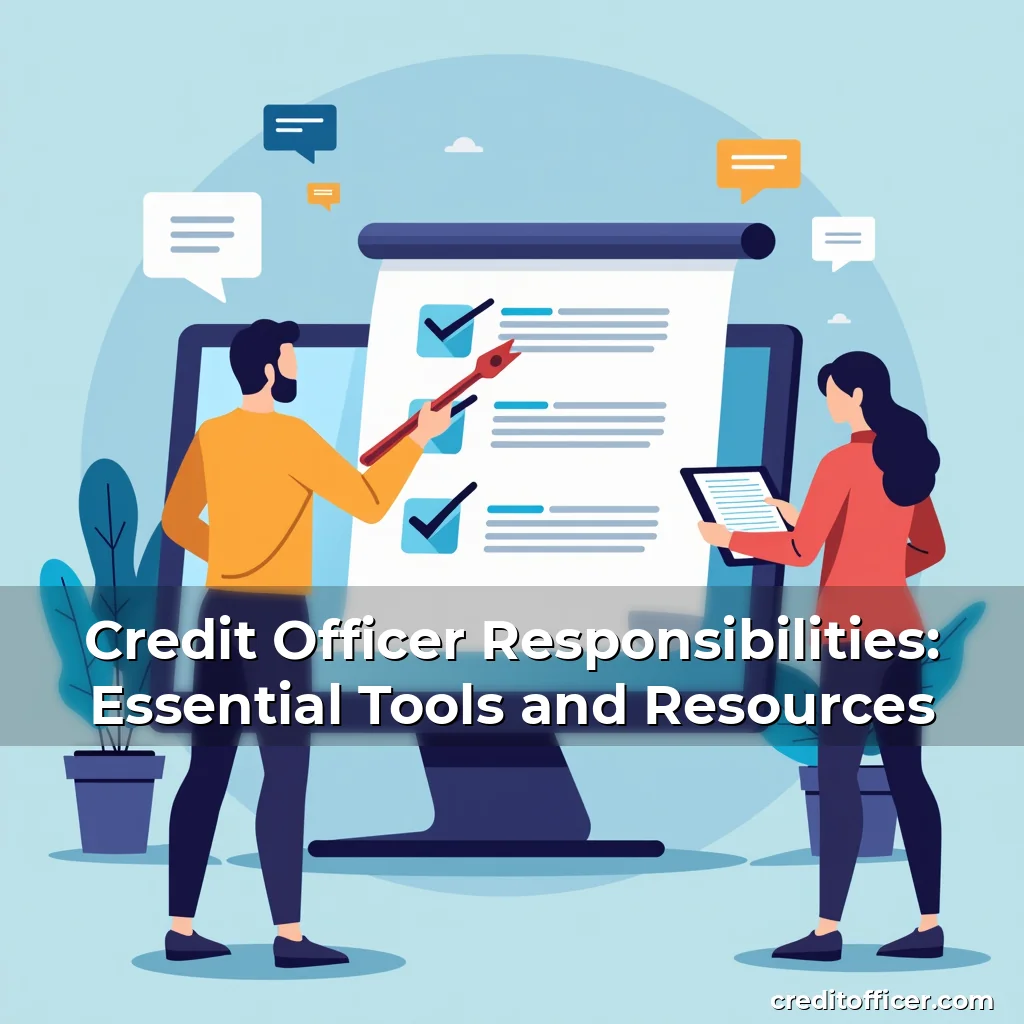
Modern software solutions revolutionize traditional manual workflows within credit departments. Automation reduces human error while increasing processing speed dramatically. Integration with enterprise systems allows real-time data access.
Artificial intelligence applications now assist in detecting anomalies indicating potential fraud attempts. Machine learning algorithms continuously refine prediction models based on emerging patterns.
Cloud-based platforms enable remote access allowing flexible work arrangements beneficial to modern workforce expectations. Secure document sharing features facilitate smoother interdepartmental coordination.
Despite tech benefits, maintaining personal touchpoints remains important. Human oversight ensures contextual understanding absent in purely algorithm-driven approaches.
Decision-Making Processes Under Pressure
Credit officers frequently face challenging scenarios requiring swift yet accurate judgments. Balancing organizational goals with individual circumstances tests professional acumen repeatedly throughout careers.
Time-sensitive requests necessitate prioritization strategies distinguishing urgent matters from routine tasks. Developing effective triage methods proves invaluable amid high-volume periods.
Moral dilemmas occasionally arise when personal connections influence professional discretion. Establishing clear boundaries maintains credibility and integrity in all dealings.
Continuous training keeps practitioners prepared for unexpected situations. Scenario-based simulations build resilience against pressure-induced errors during critical moments.
Professional Development Opportunities
Pursuing advanced certifications demonstrates commitment to excellence within the field. Credentials like CFA or CRMA enhance credibility attracting better career advancement opportunities.
Participation in industry conferences exposes professionals to innovative practices transforming the sector. Networking events foster relationships benefiting future collaborations and mentorship possibilities.
Online courses offer flexible ways to acquire new skills complementing existing qualifications. Platforms specializing in fintech education cater specifically to contemporary needs arising from digital transformation.
Mentorship programs benefit both mentors and mentees creating mutually advantageous growth environments. Experienced advisors pass along hard-won wisdom accelerating junior colleagues’ progress curves.
Upholding Ethical Standards
Honesty forms the bedrock upon which successful credit careers are built. Maintaining absolute confidentiality regarding sensitive financial information builds lasting client trust.
Conflict-of-interest scenarios demand careful handling particularly when personal investments intersect professionally relevant decisions. Disclosing potential biases upholds professionalism expectations consistently.
Resisting undue influence from third parties preserves impartiality in all evaluations performed daily. Integrity remains paramount even amidst intense performance pressures.
Ethics training modules reinforce best practices preventing lapses in judgment leading to disciplinary actions against unscrupulous behavior within the profession.
Client Relationship Management
Fostering long-term relationships increases repeat business while reducing acquisition costs associated with acquiring new customers. Personalized service distinguishes exceptional performers from average ones.
Regular check-ins allow early detection of issues potentially leading to defaults. Proactive engagement enables timely interventions preserving accounts otherwise destined for write-offs.
Customer feedback mechanisms improve service quality continually. Analyzing complaints identifies systemic problems warranting procedural adjustments.
Specialized portfolios catering to niche markets create competitive advantages. Understanding unique needs enhances value proposition offered to targeted demographics effectively.
Performance Measurement Techniques
KPI tracking quantifies effectiveness enabling data-driven improvements over time. Common metrics include approval rates, default percentages, and portfolio growth figures.
Benchmarking against peer institutions highlights relative strengths weaknesses within organizations operating similar market segments. Comparative analyses inform strategic direction accordingly.
Dashboard technologies visualize key performance indicators facilitating rapid interpretation of operational health statuses. Customizable alerts notify managers when thresholds get breached urgently needing remedial action.
Regular reviews ensure continuous improvement initiatives remain aligned with overarching business objectives. Adjustments made based on analytical findings drive sustainable progress toward shared targets.
Navigating Industry Challenges
Economic downturns disproportionately affect credit portfolios creating elevated bad debt exposures. Anticipatory measures become crucial during cyclical recessions threatening financial stability across entire industries.
Increasing competition pushes firms to differentiate offerings uniquely addressing specific buyer pain points. Innovation becomes necessary survival tactic amidst crowded marketplace landscapes.
Rapid technological adoption creates implementation hurdles requiring adequate training resources beforehand. Seamless integration avoids productivity losses disrupting workflow continuity negatively.
Societal shifts influencing consumer behavior demand adaptive strategies responding proactively instead of reactively adjusting course midstream.
Future Outlook for Credit Professionals
Emerging technologies promise transformative changes enhancing precision and scope of credit evaluation capabilities. Blockchain implementations may soon streamline verification processes globally eliminating redundant paper trails entirely.
AI-powered chatbots could handle routine inquiries freeing human agents to focus on complex cases demanding personal interaction nuances machines currently lack capacity replicating fully.
As automation expands, soft skills emphasizing emotional intelligence gain greater importance compensating for reduced reliance on technical expertise alone determining career trajectories positively.
Global connectivity facilitates cross-border lending expanding horizons beyond domestic markets previously constrained by geographical limitations restricting outreach effectiveness considerably.
Conclusion
Credit officers occupy pivotal roles bridging financial institutions with borrowers seeking capital solutions. Mastering diverse responsibilities ensures balanced outcomes satisfying mutual interests effectively.
By embracing ongoing education, leveraging cutting-edge tools wisely, and adhering steadfastly to ethical principles, professionals excel in this ever-evolving domain successfully navigating complexities ahead confidently.

news is a contributor at CreditOfficer. We are committed to providing well-researched, accurate, and valuable content to our readers.